The New Enterprise Risk Map: Lessons from the Scoular case
In July 2026 the US Department of Justice resolved an FCPA case against The Scoular Company, whose customs brokers paid Mexican border officials to keep rail shipments moving. Without the company’s knowledge, part of that money benefited people associated with a cartel.
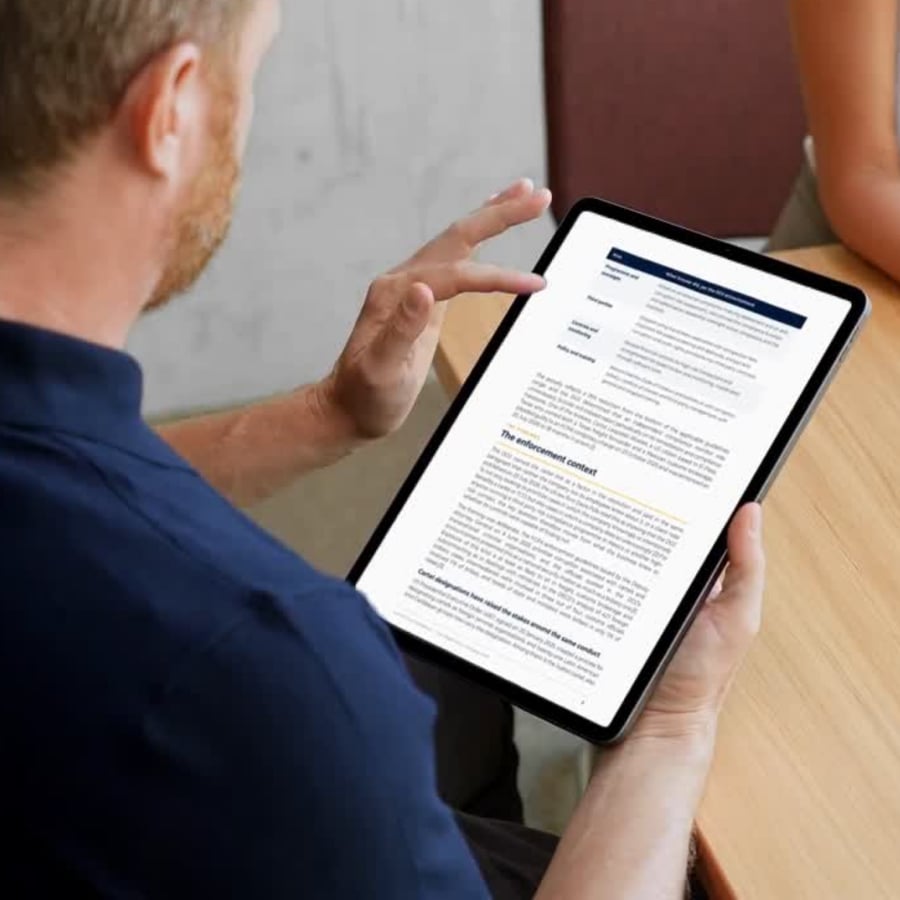
This paper sets out what the DOJ credited, how cartel terrorism designations have raised the stakes for the same payments, and where European and UK rules point the same way.


What You’ll Learn
Drawing on the Scoular case and the cartel designations that followed, the paper covers:
- What happened in the Scoular case, taken from the DOJ announcement and the deferred prosecution agreement filed on 17 July 2026
- How bribery through customs brokers created risk for a company operating at the US–Mexico border
- Where cartel exposure enters a supply chain through third parties
- What the case means for your third-party risk programme, and how it changes the enterprise risk map
Who It’s For
- Heads of ethics and compliance responsible for anti-bribery and sanctions programmes
- Third-party risk management leads who onboard and monitor intermediaries
- In-house counsel advising on FCPA, sanctions and supply chain due diligence obligations
- Supply chain and logistics leaders who appoint and pay customs brokers and freight forwarders
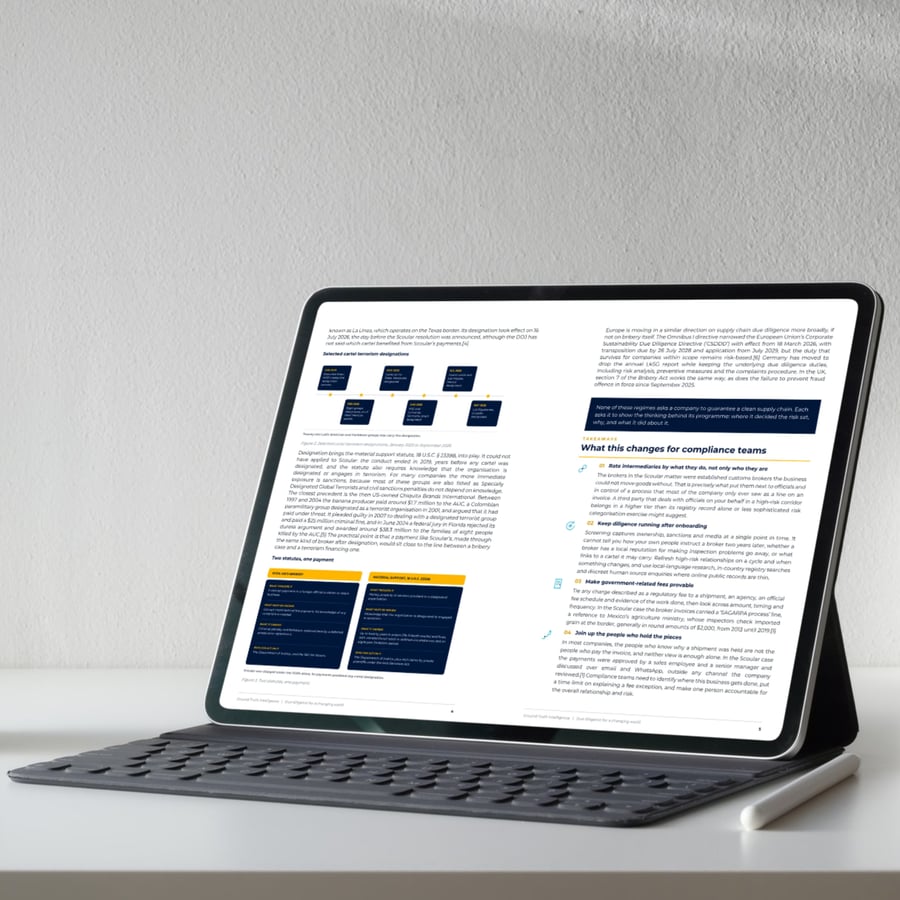
Case facts are taken from the DOJ announcement of 17 July 2026 and the deferred prosecution agreement and statement of facts filed the same day. Prepared October 2026. The information provided herein is for informational purposes only and does not constitute legal advice.
Why GTI?
GTI combines technology with on-the-ground intelligence to help organisations verify information, manage risk, and make informed decisions - anywhere in the world.
Download the whitepaper for the full case analysis, the regulatory picture and four steps your team can take on intermediary risk.